Amazon Corporation is one of the most influential and recognizable companies in the modern business world. What began as a modest online bookstore has evolved into a global technology powerhouse operating across multiple industries. Today, Amazon’s business interests extend far beyond retail, covering cloud computing, digital entertainment, artificial intelligence, logistics, smart devices, and advanced technology solutions.
Every day, millions of consumers, businesses, and organizations rely on Amazon for shopping, entertainment, cloud infrastructure, and digital services. Through a relentless focus on customer satisfaction, technological advancement, and operational excellence, Amazon has established itself as a major force in the global digital economy.
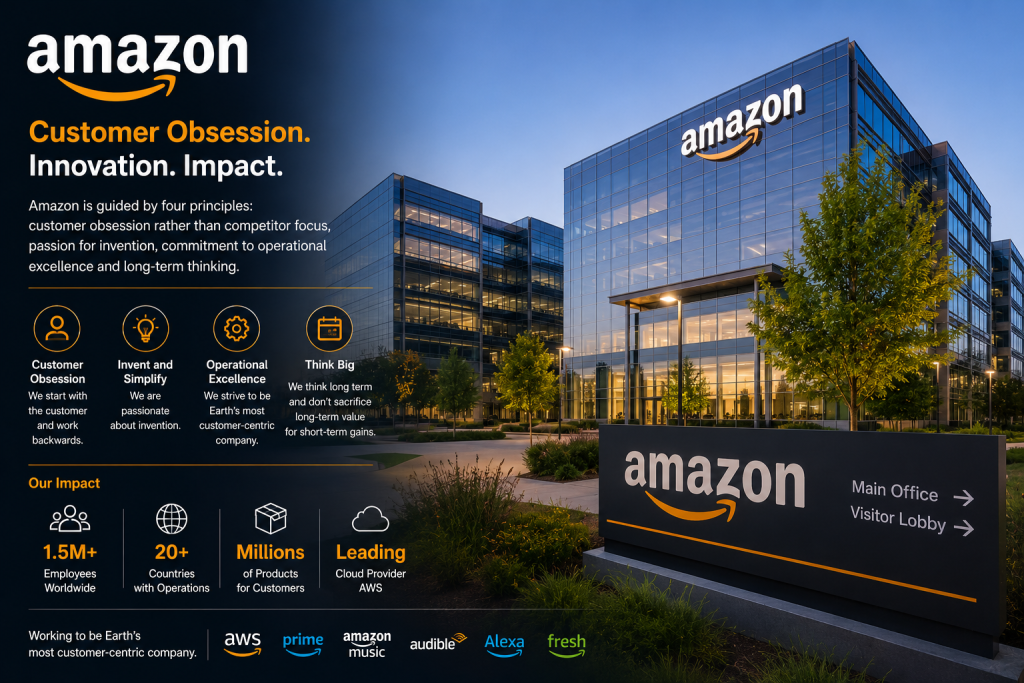
This article examines Amazon’s history, business structure, technological innovations, global expansion, workplace culture, environmental initiatives, challenges, and future growth prospects.
The History of Amazon
Amazon was established in 1994 by entrepreneur Jeff Bezos in Seattle, Washington. Bezos recognized the enormous potential of the internet and envisioned a platform that could offer customers a convenient and efficient way to shop online. He initially chose books as the company’s first product category because of the vast number of titles available and the ease of cataloging them digitally.
The Amazon website officially launched in 1995 and quickly attracted customers from across the United States. The platform gained popularity due to its extensive selection, competitive pricing, and user-friendly shopping experience. As demand increased, Amazon expanded its product offerings beyond books to include electronics, apparel, household goods, toys, and countless other categories.
In 1997, Amazon became a publicly traded company, marking a significant milestone in its growth journey. Over the following decades, the company expanded internationally, invested heavily in technology, and diversified its business operations. Today, Amazon serves customers in numerous countries and ranks among the largest corporations in the world.
Amazon’s Business Model
Amazon’s long-term success is rooted in a business strategy centered on innovation, customer convenience, operational efficiency, and continuous improvement. The company generates revenue through several major business divisions that complement one another and strengthen its overall ecosystem.
E-Commerce Marketplace
Amazon is widely known for its online marketplace, which offers an enormous variety of products ranging from electronics and fashion items to groceries, books, beauty products, and home essentials.
A key component of Amazon’s retail success is its third-party seller network. Through Amazon Marketplace, independent businesses and entrepreneurs can list and sell products to customers worldwide. This model allows Amazon to expand product selection while providing sellers with access to a massive global customer base.
Amazon Prime
Amazon Prime is one of the company’s most valuable subscription services. Members enjoy benefits such as expedited shipping, access to streaming content, exclusive discounts, cloud storage options, and special shopping events.
The Prime program has significantly strengthened customer loyalty by creating a comprehensive ecosystem that encourages frequent engagement with Amazon’s products and services.
Amazon Web Services (AWS)
Amazon Web Services, commonly known as AWS, represents one of the most profitable segments of the company. AWS provides cloud computing solutions, data storage services, cybersecurity tools, machine learning capabilities, and artificial intelligence technologies to organizations worldwide.
Businesses of all sizes depend on AWS infrastructure to support websites, applications, data management, and digital operations. The platform has become a cornerstone of modern cloud computing and digital transformation initiatives.
Digital Entertainment Services
Amazon has established a strong presence in the entertainment industry through services such as Prime Video, Amazon Music, Kindle ebooks, Audible audiobooks, and gaming-related platforms.
The company invests heavily in original content production, including movies, television series, documentaries, and exclusive programming designed to compete with leading streaming services around the world.
Amazon’s Global Expansion Strategy
Over the years, Amazon has successfully expanded its operations beyond the United States and into major international markets across Europe, Asia, the Middle East, and Latin America.
Its global growth strategy includes:
- Customized shopping platforms for local markets
- Regional fulfillment centers and distribution networks
- Country-specific payment methods
- Multilingual customer support services
- Partnerships with local businesses and suppliers
By adapting its services to regional preferences and consumer behavior, Amazon has strengthened its international presence and become one of the most recognized brands worldwide.
Innovation and Technological Advancement
Innovation remains a fundamental part of Amazon’s corporate culture. The company consistently invests in research and development to create technologies that enhance customer experiences and improve business efficiency.
Artificial Intelligence and Alexa
Amazon has become a leader in artificial intelligence through Alexa, its voice-controlled virtual assistant. Integrated into Echo smart devices, Alexa enables users to perform various tasks using voice commands, including playing music, controlling smart home devices, checking weather updates, setting reminders, and making online purchases.
The continued development of AI technologies demonstrates Amazon’s commitment to creating more personalized and intelligent user experiences.
Smart Devices and Consumer Technology
Amazon has developed a broad portfolio of consumer technology products, including:
- Echo smart speakers
- Kindle e-readers
- Fire tablets
- Fire TV streaming devices
- Ring home security systems
- Smart home accessories
These products help integrate Amazon’s services into customers’ daily lives while strengthening the company’s digital ecosystem.
Advanced Logistics and Delivery Systems
Amazon has revolutionized logistics and supply chain management through significant investments in automation and technology.
The company utilizes:
- Robotics in fulfillment centers
- Automated inventory management systems
- Real-time package tracking
- Artificial intelligence for demand forecasting
- Machine learning for route optimization
In selected regions, Amazon has also explored drone delivery programs and advanced automation technologies designed to accelerate order fulfillment and improve delivery efficiency.
Workplace Culture and Employment Opportunities
Amazon is among the largest employers globally, offering career opportunities across numerous professional fields. The company recruits talent in areas such as:
- Software development
- Cloud computing
- Customer service
- Marketing and advertising
- Logistics management
- Artificial intelligence
- Data science and analytics
- Product development
In addition to full-time positions, Amazon provides internships, graduate programs, apprenticeships, and remote work opportunities.
Employees often have access to professional development programs, educational support, leadership training, healthcare benefits, and career advancement resources aimed at fostering long-term growth.
Sustainability and Environmental Commitments
As one of the world’s largest corporations, Amazon faces increasing expectations regarding environmental responsibility. In response, the company has introduced various sustainability initiatives intended to reduce its ecological footprint and promote cleaner business operations.
Key environmental goals include:
- Expanding renewable energy investments
- Increasing the use of electric delivery vehicles
- Reducing packaging materials and waste
- Improving energy efficiency across facilities
- Working toward long-term carbon reduction targets
Amazon has also invested in climate-focused innovation projects and sustainable technologies designed to support global environmental objectives.
Amazon’s Influence on Small Businesses
Amazon plays a significant role in supporting entrepreneurs and small businesses through its marketplace platform. Millions of independent sellers use Amazon to access customers in domestic and international markets without building extensive e-commerce infrastructure.
Through fulfillment and logistics services, Amazon assists sellers with:
- Inventory storage
- Order processing
- Shipping and delivery
- Customer support
- International expansion
These resources enable many businesses to scale more efficiently and reach larger audiences than would otherwise be possible.
However, some critics argue that sellers may face intense competition within Amazon’s marketplace environment, particularly when competing against large brands and highly competitive pricing strategies.
Challenges and Criticisms
Despite its impressive growth and achievements, Amazon has encountered criticism in several important areas.
Workplace Conditions
Various reports and labor organizations have raised concerns regarding warehouse working environments, productivity expectations, employee well-being, and labor rights practices.
Market Dominance
Some industry observers and regulators have questioned whether Amazon’s size and market influence create challenges for smaller competitors and emerging businesses.
Data Privacy and Security
As a technology-driven company, Amazon faces ongoing scrutiny regarding customer data protection, privacy practices, and cybersecurity measures.
Environmental Impact
Although Amazon has introduced sustainability initiatives, environmental advocates continue to encourage the company to accelerate efforts aimed at reducing emissions and minimizing environmental impact.
Amazon regularly addresses these concerns through operational improvements, policy updates, and continued investment in responsible business practices.
Key Factors Behind Amazon’s Success
Several core strengths have contributed to Amazon’s sustained growth and market leadership:
- Strong customer-centric philosophy
- Extensive product selection
- Competitive pricing strategies
- Fast and reliable delivery services
- Continuous technological innovation
- Powerful cloud computing capabilities
- Global operational reach
- Integrated digital ecosystem
- Data-driven decision-making
- Long-term strategic planning
These advantages have enabled Amazon to remain competitive while adapting to evolving consumer expectations and technological developments.
The Future of Amazon
Amazon continues to invest heavily in emerging technologies and new business opportunities. Industry analysts expect the company to remain active in areas such as:
- Artificial intelligence and machine learning
- Healthcare technology solutions
- Smart home innovation
- Robotics and automation
- Advanced cloud computing
- Supply chain modernization
- Digital entertainment expansion
- Space-related technology partnerships
As global technology continues to evolve, Amazon is expected to play a major role in shaping the future of commerce, digital infrastructure, and connected technologies.
Conclusion
Amazon Corporation has fundamentally transformed the way people shop, consume entertainment, access digital services, and conduct business. From its origins as an online bookstore to its current position as a global leader in e-commerce, cloud computing, and technological innovation, the company’s growth story is one of the most remarkable in modern business history.
Its dedication to customer satisfaction, operational excellence, and continuous innovation has enabled Amazon to build a powerful global presence. Although the company continues to face challenges related to competition, workplace practices, privacy concerns, and sustainability, it remains one of the most influential organizations in the world.
Through online retail, cloud infrastructure, streaming services, smart devices, and emerging technologies, Amazon continues to shape industries, influence consumer behavior, and drive the future of global commerce.